← All articles
Travel guide · 8 min read · 25 August 2026

Roman Trier: 2,000 years in a single stroll
Roman Trier: 2,000 years in a single stroll

Augusta Treverorum was once one of the largest cities of the Roman Empire north of the Alps – and Trier doesn't keep that heritage behind glass, it lives with it: the Roman bridge still carries the city's traffic, services are held in the Basilica of Constantine every Sunday, and the Porta Nigra has simply stood there for almost 1,900 years. Trier's Roman monuments have been UNESCO World Heritage since 1986. Here's the walking route we recommend to our guests – easily done in a day on foot.

The Roman highlights

🏛️Porta NigraThe best-preserved Roman city gate north of the Alps and the city's landmark. Inside, you can climb several floors right up to the roof – from the top you look down Simeonstraße all the way to the main market square.The sandstone was never rendered – hence "black gate"
🎭AmphitheatreAt the foot of the Petrisberg, built for around 20,000 spectators. The most impressive part lies beneath the arena: the cellar where scenery and cages were hoisted up by lift.Costumed tours and open-air events run here in summer
♨️Imperial BathsOne of the largest bathing complexes of the Roman Empire – never actually completed. What remains are soaring apses and a labyrinth of underground service tunnels you can walk through today.It's cool down there – pleasant even on hot days
Basilica of ConstantineEmperor Constantine's throne hall, one vast room without columns – to this day among the largest surviving single spaces of antiquity. You only grasp the sheer size once you're standing inside.Now a Protestant church · free entry
🌉Roman bridgeIts piers have stood in the river since the 2nd century – making it Germany's oldest bridge still in use. Cars, buses and cyclists roll over Roman foundations every day.Best view: from the Moselle bank on the west side
🛁Barbara BathsThe older baths near the Roman bridge, once even larger. A walkway route leads across the site – less visited than the Imperial Baths and worth the detour for exactly that reason.Free entry · open April to October
🏺Rheinisches LandesmuseumThis is where the excavations ended up: mosaics, funerary monuments like the Neumagen wine ship – and a hoard of well over 2,500 Roman gold coins, the largest of its kind.Right by the Palace Garden · a fixture on rainy days
🗿Igel ColumnA 23-metre Roman funerary monument that has simply stood by the roadside in Igel for 1,800 years – also World Heritage. Practically on your way if you're staying in Konz.A few minutes from Konz by car or train

Our one-day route

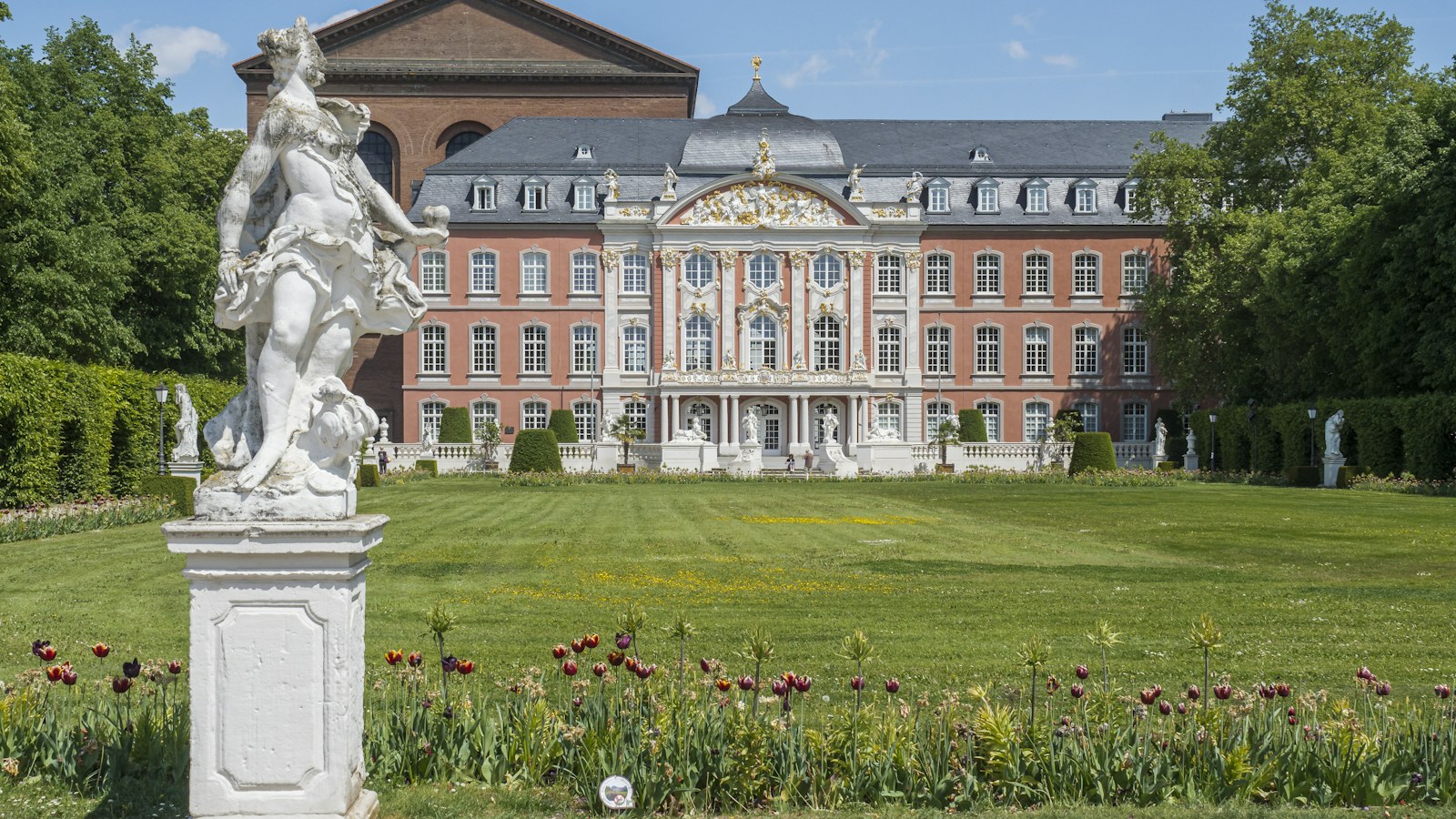
Start at the Porta Nigra when it opens – in the morning you'll have the gate almost to yourself. Head down Simeonstraße to the main market square and on to the cathedral, whose core is Roman too: the massive stone blocks on the north side date from the 4th century. Past the Basilica of Constantine and through the Palace Garden you reach the Imperial Baths, then the amphitheatre on the hillside. Back in town, the Landesmuseum is worth the afternoon – and at sunset, stand on the Moselle bank and take in the Roman bridge.

If you're visiting several sites, a combined ticket works out cheaper: the Antikencard is available at the ticket desks of the Roman monuments and in the Landesmuseum in several versions. Current opening times and prices are on the official pages – both change with the season.

Details correct as of August 2026, no guarantee – best to check opening times and prices briefly before your visit.

From our Trier apartments you're in the middle of the World Heritage within minutes – the Olewig Suite even sits halfway to the amphitheatre. And an evening stroll to the floodlit Porta Nigra is one of the things our guests praise most often.

Your home away from home in Trier & Konz

Book direct and always get the best price – guaranteed cheaper than the usual booking platforms.

View apartments